
Sustainable Ways to Enjoy Flowers for Longer
The Floral Muse6 min readUpdated
On this page
Fresh flowers are one of life's small luxuries — but they needn't be a fleeting one, and they certainly needn't be wasteful. With a little care and a few thoughtful habits, a single bunch can bring you weeks of pleasure, then carry on giving long after the last petal has fallen. Making flowers go further is kinder to your budget and gentler on the planet, and it's genuinely satisfying.
As an independent Leeds florist who works with fresh, hand-crocheted and preserved flowers, we think about longevity at every stage — from the moment a bouquet leaves the studio to what happens once it's past its best. Here's how we help our flowers earn their keep, and how you can too.
Start with good care — it's the cheapest way to buy more days
The single biggest thing you can do for longevity costs nothing: care for the flowers you already have. Well-tended fresh flowers reliably give you 7–14 days of vase life, and the difference between the low end and the high end is almost always down to a few simple habits.
- Trim on arrival, then every few days. Cut 2–3cm off each stem at a sharp 45° angle so it can drink freely. A clean, angled cut has far more surface area than a squashed, straight one.
- Change the water. Cloudy water means bacteria, and bacteria block stems. Refresh it every two days and give the vase a proper rinse.
- Strip lower leaves. Any foliage sitting below the waterline will rot and foul the water fast.
- Keep them cool. Away from radiators, direct sun, draughts and — surprisingly — the fruit bowl (ripening fruit gives off ethylene, which ages blooms).
Our full flower care guide walks through this in more detail, including which stems are thirstiest and how to revive a wilting bloom. Master the basics and you'll comfortably reach the upper end of that vase-life window.
Give spent blooms a second life: drying and pressing
When flowers are finally past their prime in the vase, that's not the end of the story — it's the start of a lovely second chapter. Drying and pressing let you keep your favourite blooms almost indefinitely, and both are wonderfully low-effort.
Air-drying
Roses, hydrangeas, statice, lavender and gypsophila dry beautifully. Gather a small bunch, tie the stems, and hang them upside down in a warm, dark, airy spot — an airing cupboard or a quiet corner works well. In two to three weeks you'll have a muted, everlasting posy. Keeping them out of direct light preserves the colour.
Pressing
Flatter flowers like pansies, cosmos and single blooms are perfect for pressing. Lay them between sheets of paper inside a heavy book, weight it down, and leave for a couple of weeks. Pressed flowers make heartfelt cards, framed keepsakes or bookmarks — a nice way to hold on to a bouquet that marked a special occasion.
A bunch that gave you a fortnight in the vase can become a keepsake you keep for years. That's the most sustainable outcome of all — nothing thrown away, and something to treasure.
Compost the rest — and skip the foam
Whatever you don't dry or press, compost. Flower stems, petals and leaves break down quickly and return nutrients to the soil rather than sitting in landfill, where organic matter releases methane as it rots. If you don't have a garden, most Leeds households can add flowers to their food-waste caddy, or a friend with an allotment will happily take them.
One caveat: only compost the plant material. Floral foam — the green block you'll find in many conventional arrangements — is a single-use plastic that sheds microplastics and never truly breaks down, so it can't go on the compost heap. We've designed it out of our work entirely, so every arrangement we make is foam-free. Choosing foam-free flowers means the whole arrangement can eventually return to the earth.
Choose everlasting from the start
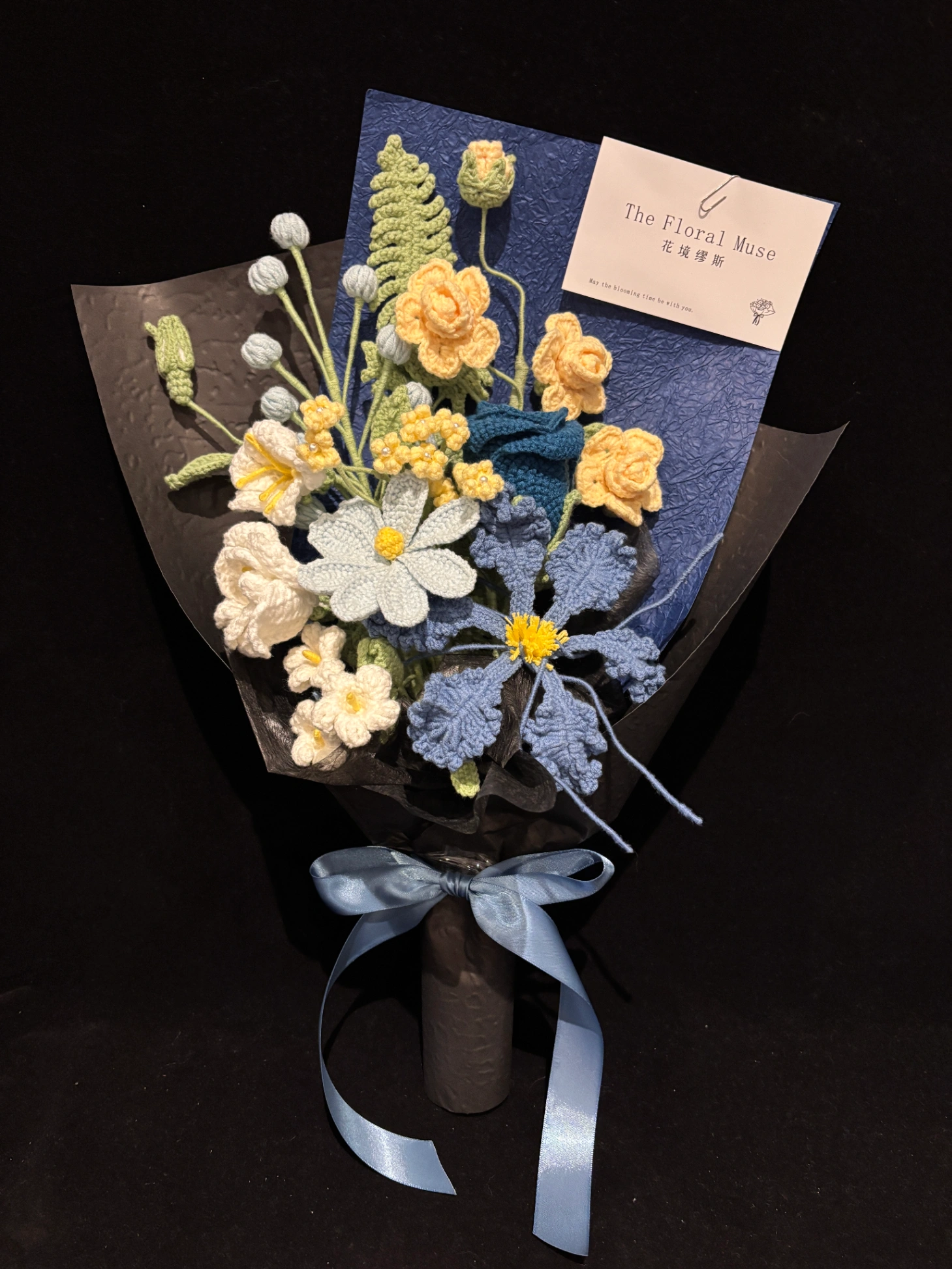
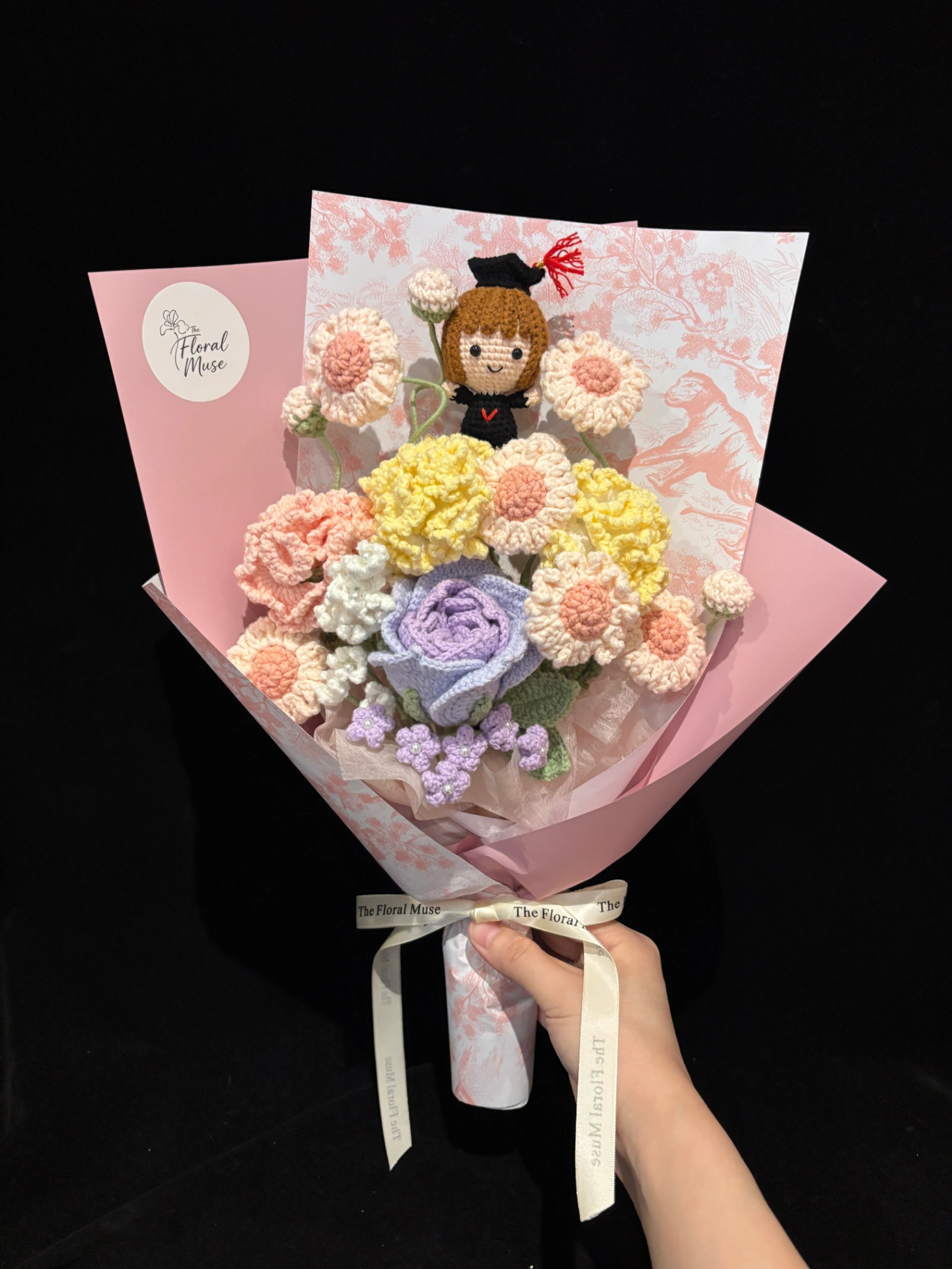
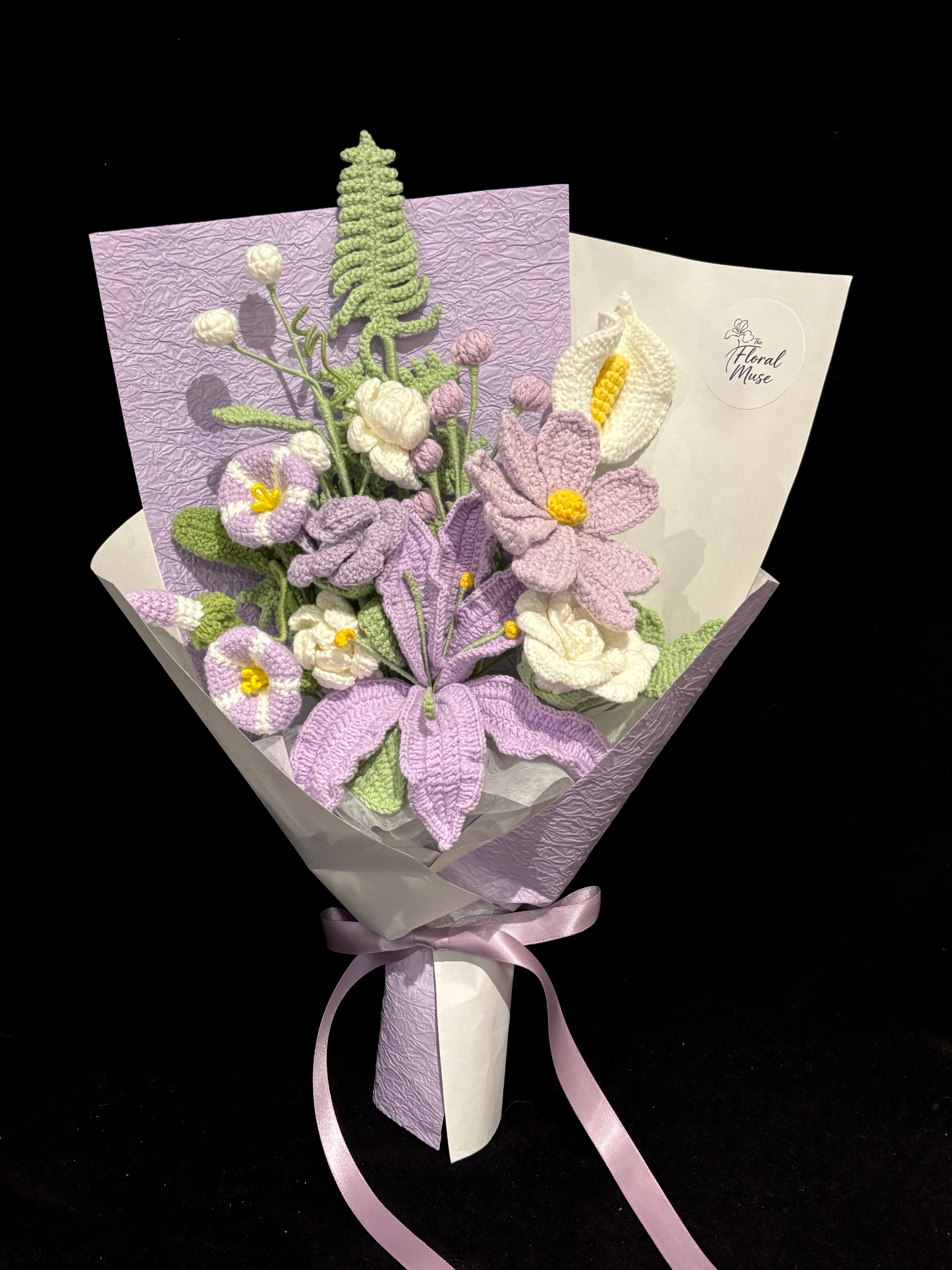
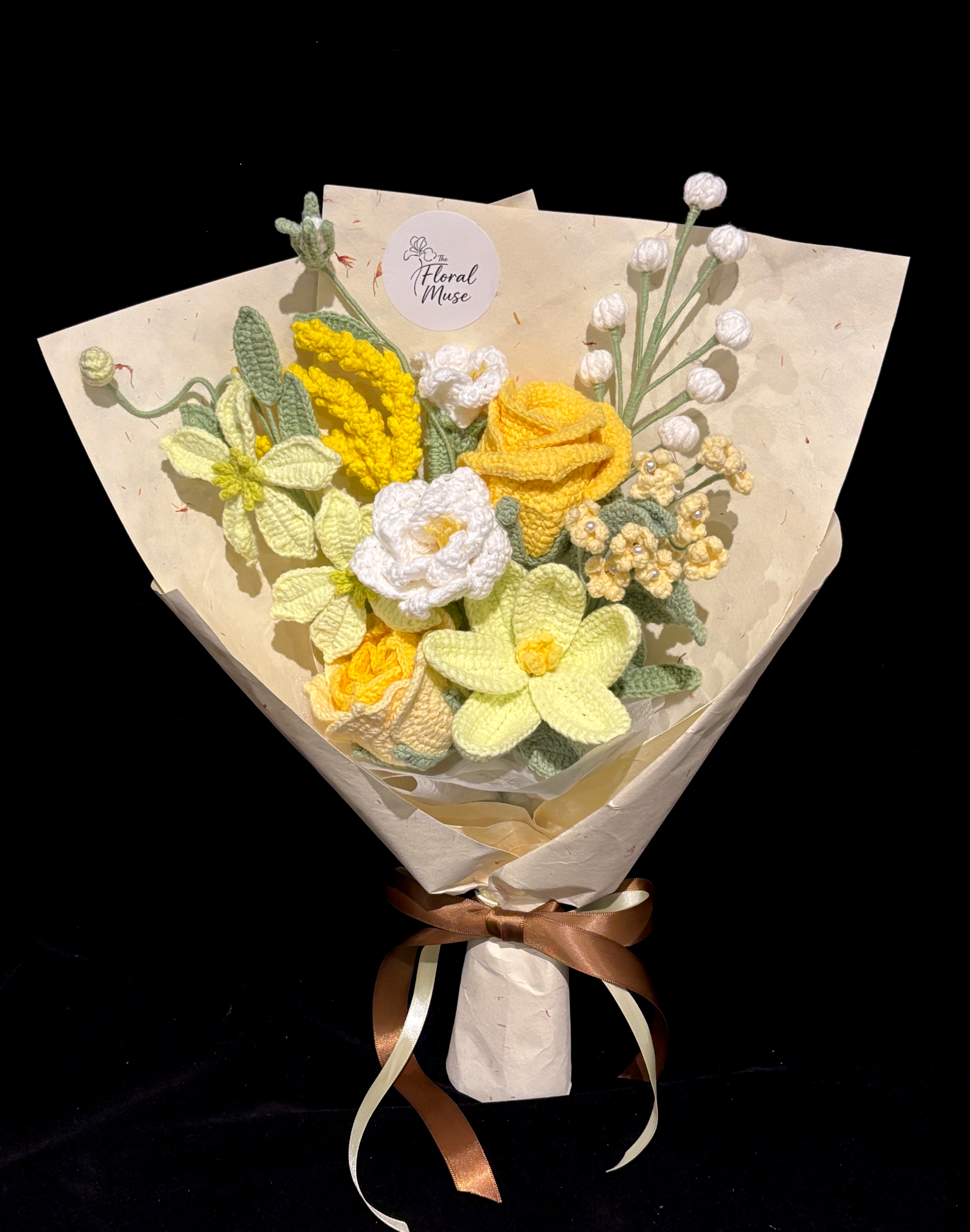
The most enduring way to enjoy flowers for longer is to choose blooms that simply don't fade. Our hand-crocheted flowers and preserved flowers are made to last 3+ years, not days, and longer with proper care — one thoughtful gift instead of a stem of purchases, and no repeat waste.
- Crochet flowers are worked stitch by stitch from soft yarn — endlessly durable, keepsake-worthy, and easy to dust off and enjoy again.
- Preserved flowers are real blooms, hand-finished to keep their natural softness and colour for months on end, with no water and no upkeep.
They're also the reassuring choice where safety matters. Because crochet is inert yarn and preserved flowers release very little pollen, there is very little to shed and far less to trigger hay fever. If a home has curious pets, they're a worry-free option too — though with any flowers we'd always suggest checking a plant against your vet's advice or the ASPCA or Blue Cross toxic-plant lists, as several popular fresh flowers (lilies especially, which are highly toxic to cats) are best kept out of reach. Our allergy-friendly bouquet options explain the choices in full. Everlasting flowers ship UK-wide, so you can send them anywhere in the country. For more on lasting blooms, browse our everlasting flowers journal.
Small choices, a big difference
Enjoying flowers for longer isn't about doing everything at once — it's about small, joyful habits: a fresh cut here, a hung posy there, a compost caddy instead of the bin, and the occasional everlasting piece that never needs replacing. Sustainability runs through everything we make, and you can read more about our approach on our sustainability page.
If you'd like to make a longer-lasting choice today, browse our fresh, crochet and preserved collections — and for more like this, our Our Story journal shares the thinking behind how we work.
Frequently asked questions
How long do fresh flowers last with proper care?
With regular water changes, angled stem trims and a cool spot away from heat and fruit, most fresh flowers give you 7–14 days of vase life. The upper end is very achievable once good care becomes a habit.
Which flowers dry the best at home?
Roses, hydrangeas, lavender, statice and gypsophila air-dry beautifully when hung upside down somewhere warm and dark. Flatter blooms like pansies and cosmos are ideal for pressing in a heavy book.
Can I compost old flowers?
Yes — petals, stems and leaves break down quickly on a compost heap or in a food-waste caddy. Just leave out any floral foam, which is a single-use plastic that can't be composted. We work without it wherever a design allows, and keep it to a minimum where the mechanics genuinely need it.
Are crochet or preserved flowers a more sustainable gift?
They can be, because a single everlasting piece lasts 3+ years rather than days — longer with proper care — with no repeat waste and no upkeep. Crochet is also completely pollen-free and preserved releases very little, which makes both a thoughtful choice for allergy-conscious homes, and they ship UK-wide.
Shop our flowers
More guides
Why Everlasting Flowers Are the Greener Gift
Crochet and preserved flowers last 3+ years — longer with proper care — no cold-chain waste, fewer repeat purchases, and a worry-free gift for pet and allergy homes. An honest, balanced look at why everlasting blooms are so often the greener choice.
What Makes a Bespoke Florist Different
Bespoke flowers are made for you — designed, arranged and finished around a person and a moment, not stacked in buckets. Here's how an independent Leeds florist differs from supermarket bunches and relay services.
Winter & Christmas Flowers
Winter has its own quiet glamour — amaryllis, hellebores, ranunculus and fragrant evergreens. Here's what's in season, how to gift it, an honest note on poinsettia and pet safety, and why it pays to order ahead for the festive peak.
Ready to buy? Our sustainability approach.
Ready to order? Browse our shop, read more guides, or get in touch about a bespoke arrangement.
You might also like our same-day flower delivery in Leeds, our flower care guide, our everlasting crochet flowers shipped UK-wide, or shop flowers by occasion.