Floral Foam & Why We Avoid It
The Floral Muse5 June 20265 min read
On this page
If you have ever been handed a flower arrangement set into a block of bright green sponge, you have already met floral foam. It is one of the most common materials in the floristry world — quietly present in wreaths, table centrepieces and shop-bought bouquets everywhere — and it is one thing we have deliberately chosen to leave out of our Leeds studio. This is the honest story of what floral foam is, why it sits so uneasily with us, and the foam-free ways we hold every single stem in place instead.
It is a small decision that says a lot about how we like to work, which is why it belongs in our our story series — the running notes on the choices behind the flowers.
What actually is floral foam?
Floral foam is that dense, spongy green brick you can push a stem straight into. It feels almost natural — light, crumbly, thirsty for water — but it is not. It is a phenolic foam: a plastic made from formaldehyde-based resins, expanded into millions of tiny cells that soak up water and keep cut stems hydrated while holding them exactly where the florist places them.
That is genuinely clever, and it is easy to see why the trade fell in love with it. A block of foam lets you build a shape in mid-air, angle blooms in any direction and transport a finished piece without a drop spilling. The problem is everything that happens afterwards.
Why we avoid it
Once you know what floral foam is made of, it is hard to un-know it. Here is what troubles us most.
- It is single-use plastic, full stop. A block is used once for one arrangement and then binned. It cannot be meaningfully cleaned and reused the way a vase or a pin holder can.
- It sheds microplastics. Foam is soft and friable — it crumbles as you work it, and every rinse at the sink washes fine plastic particles down the drain and, eventually, towards our waterways. Those particles do not disappear; they simply get smaller.
- It does not biodegrade or compost. Despite the earthy green colour, foam does not break down into soil. It fragments into ever-tinier pieces of plastic and lingers in landfill for a very long time.
- It is not kerbside recyclable. There is no easy household route to dispose of it responsibly, so almost all of it ends up as general waste.
We would rather spend an extra few minutes building a proper mechanic than send a brick of single-use plastic out of the door with every arrangement.
Avoiding foam is one thread in a wider set of habits — reusable containers, seasonal stems, composting our green waste — and you can read the bigger picture of how we think about all of this on our sustainability page.
How we hold flowers without foam
Foam-free floristry is not new — it is how arrangements were built for generations before the sponge arrived. These are the mechanics we reach for instead, all of them reusable or fully natural.
Chicken wire and mesh
A ball of crumpled florist's wire mesh, tucked inside a vase or bowl, creates a grid of little pockets that grip each stem at the angle we want. It gives us all the structure of foam with none of the plastic waste, and the wire is used again and again.
Pin holders and flower frogs
The kenzan — a heavy metal pin holder, sometimes called a flower frog — sits in the base of a shallow dish. Stems press onto the pins and stay exactly put. These are beautiful, near-indestructible tools that can last a lifetime.
Tape grids, moss and natural bindings
For a wide-mouthed vase, a simple lattice of tape across the opening does the job invisibly. For more sculptural pieces we turn to natural moss, twine and woven stems, so anything left behind can go on the compost rather than in the bin.
The hand-tied spiral
Many of our bouquets need no internal support at all. Building stems in a spiral in the hand creates a self-supporting posy that stands beautifully in a vase of clean water — which, happily, is also how flowers most like to drink.
What foam-free means for your flowers
Skipping foam is not a compromise — if anything it tends to help. Our fresh, locally delivered flowers sit in genuine water rather than a saturated sponge, so they drink freely and, with a little care, give you a lovely vase life of around 7–14 days. A few simple habits go a long way here, and we have gathered them all in our flower care guide.
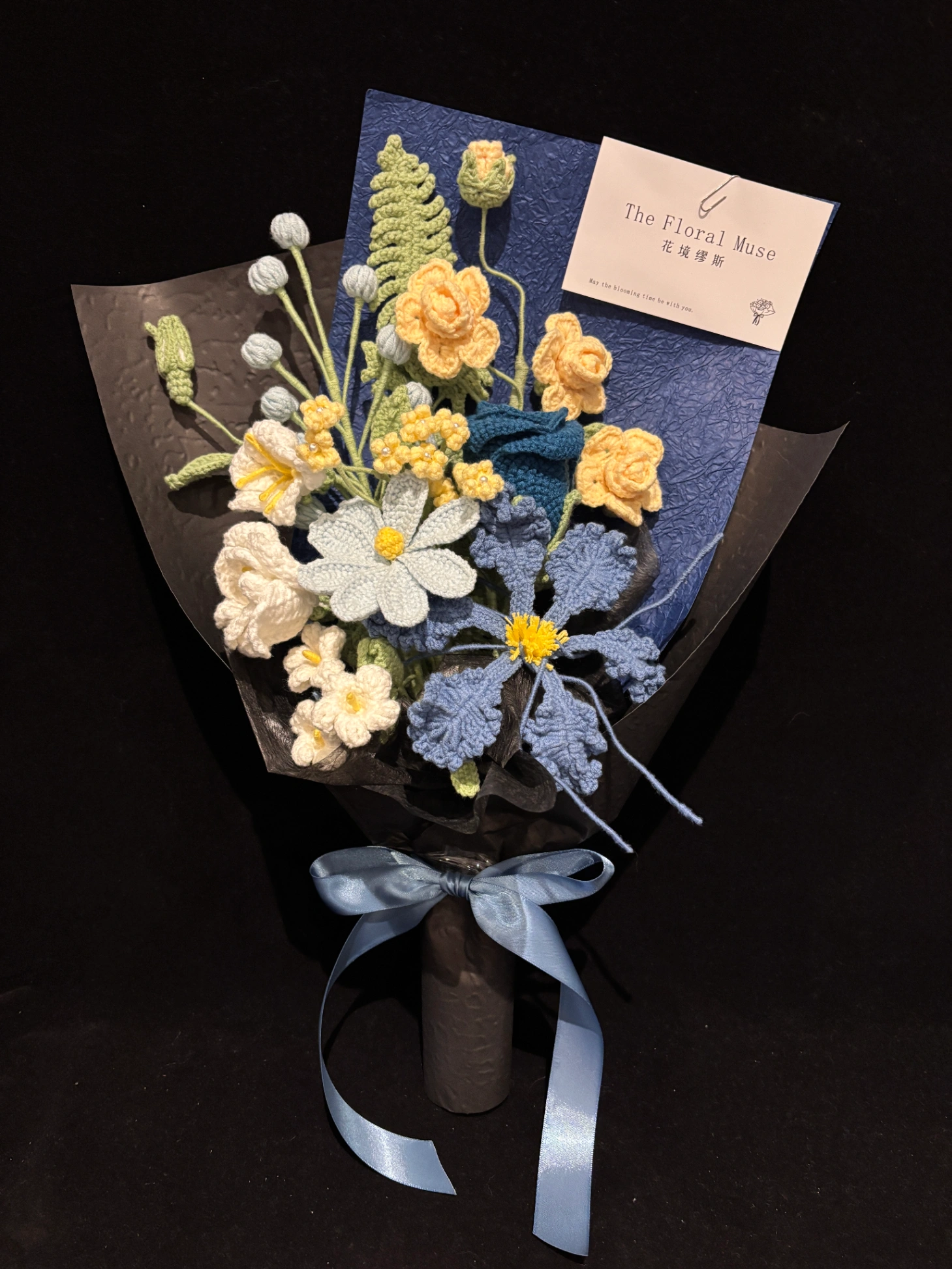
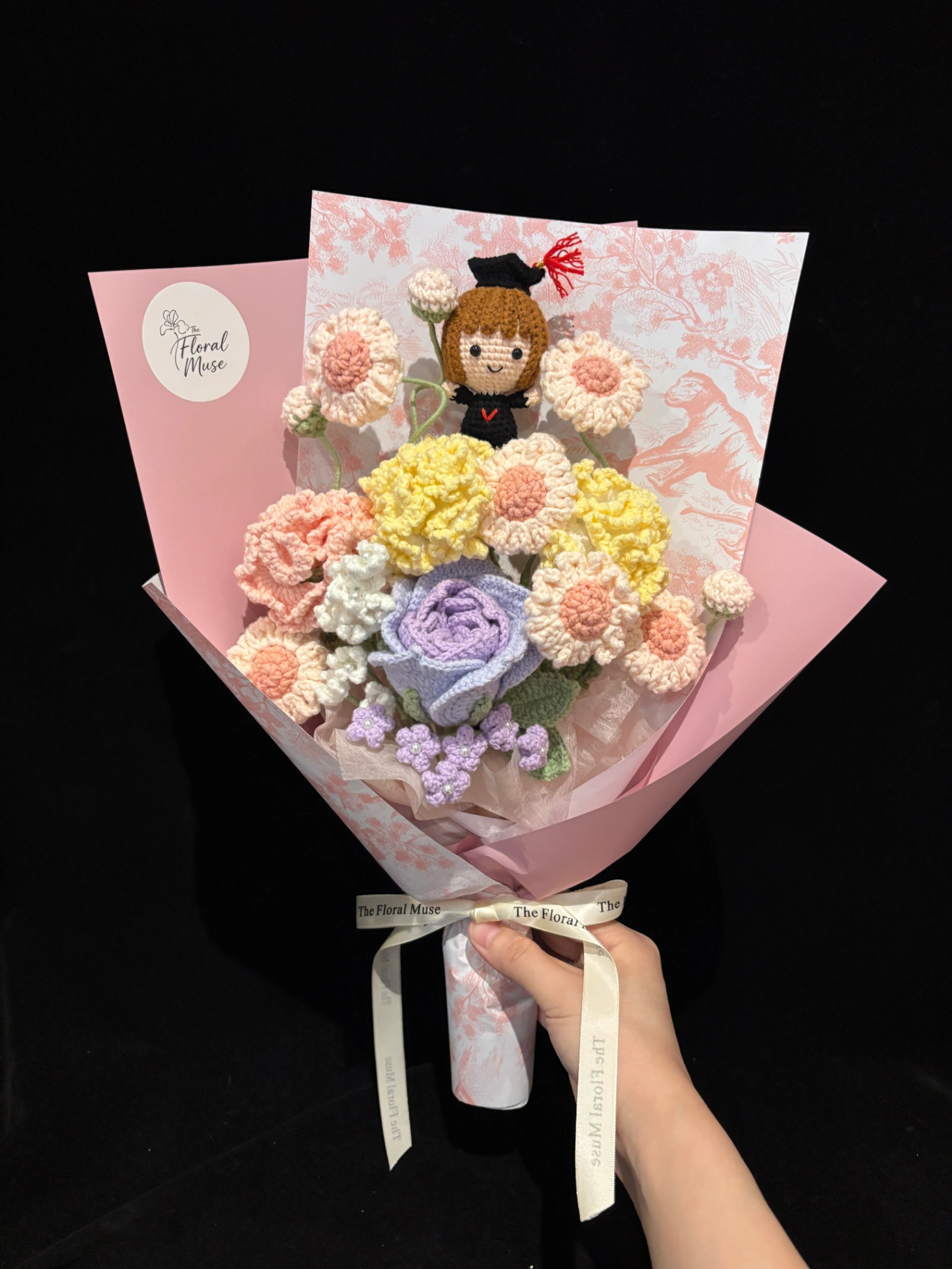
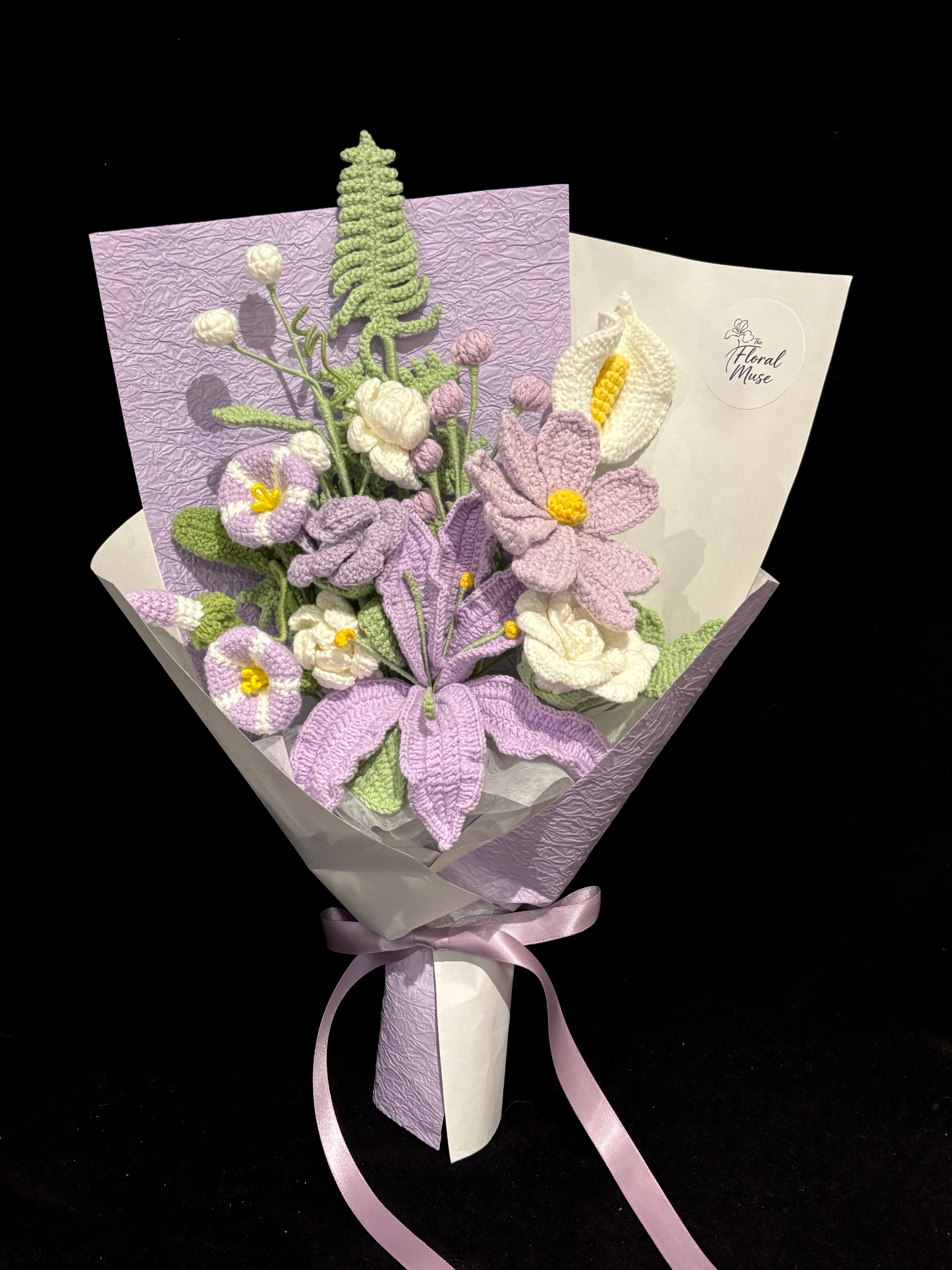
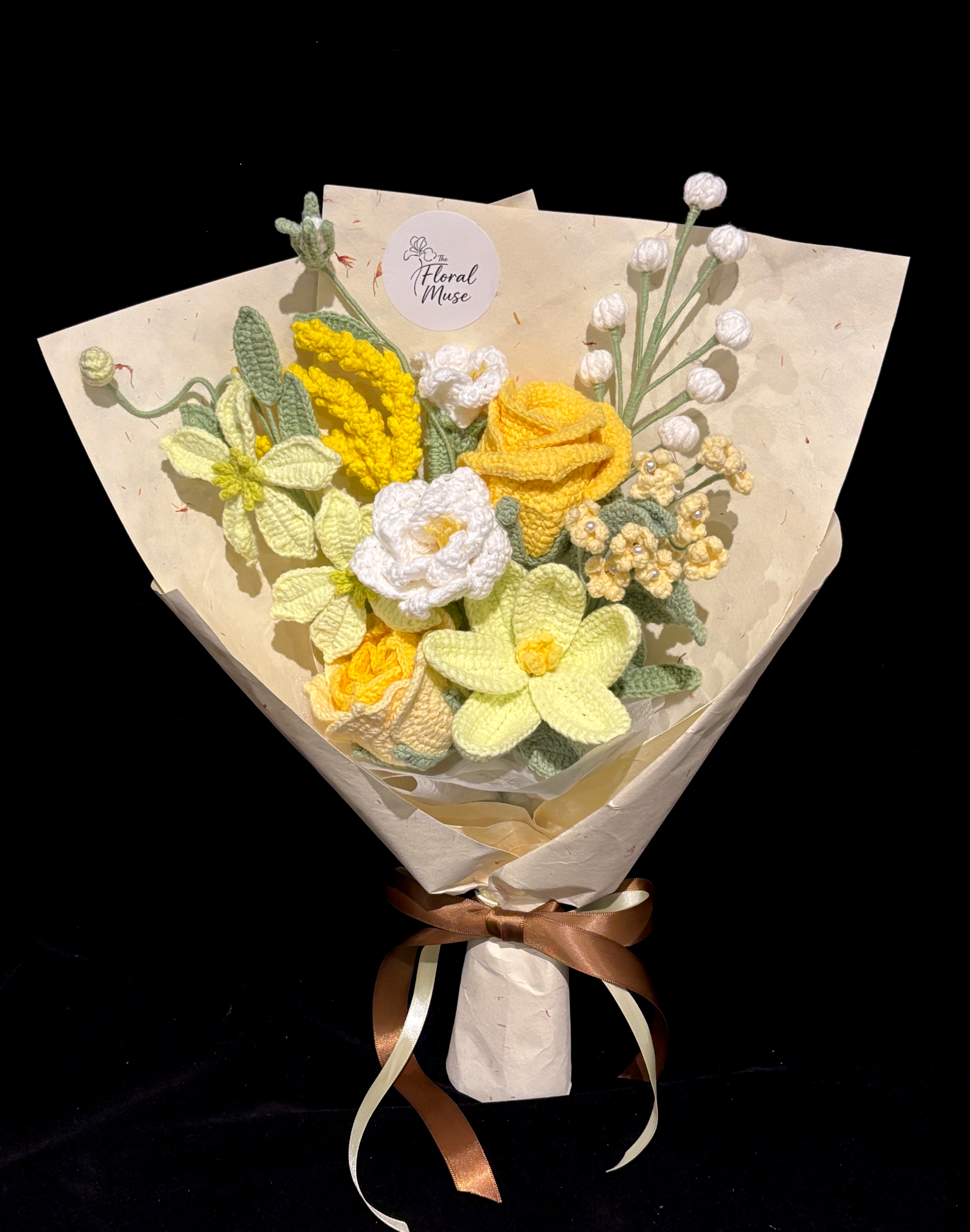
Our hand-crocheted and preserved flowers take the idea even further: they never need foam or water at all. Crochet blooms are made from inert yarn, so there is no pollen and nothing to wilt — a genuinely worry-free option if allergies or a curious pet are on your mind (as always, do check a trusted source such as your vet, the ASPCA or the Blue Cross for anything a pet might reach). Preserved stems are pollen-free too, though not edible, and simply last and last. If you would like to explore why a lasting bloom can be the kinder gift, our writing on everlasting flowers is a lovely place to start.
Ready to send something beautiful and foam-free? Have a browse of our flowers, or tell us what you have in mind on our enquiry page and we will make something just for you.
Frequently asked questions
Is floral foam recyclable or compostable?
No. Floral foam is a phenolic plastic, so it is neither kerbside recyclable nor genuinely compostable — it simply breaks into smaller and smaller microplastics over time, which is exactly why we avoid it.
Do foam-free arrangements last as long?
Yes, and often longer. Fresh stems sit in clean water rather than a sponge, so they hydrate freely and typically enjoy a vase life of around 7–14 days with a little care.
How do you keep flowers in place without foam?
We use reusable mechanics such as crumpled florist's wire, metal pin holders and tape grids, along with natural moss, twine and self-supporting hand-tied spirals — all foam-free.
Which flowers never need foam or water at all?
Our hand-crocheted and preserved flowers. They require no water, produce no pollen and last indefinitely, making them a practical, low-maintenance choice that ships UK-wide.
Shop our flowers
More guides
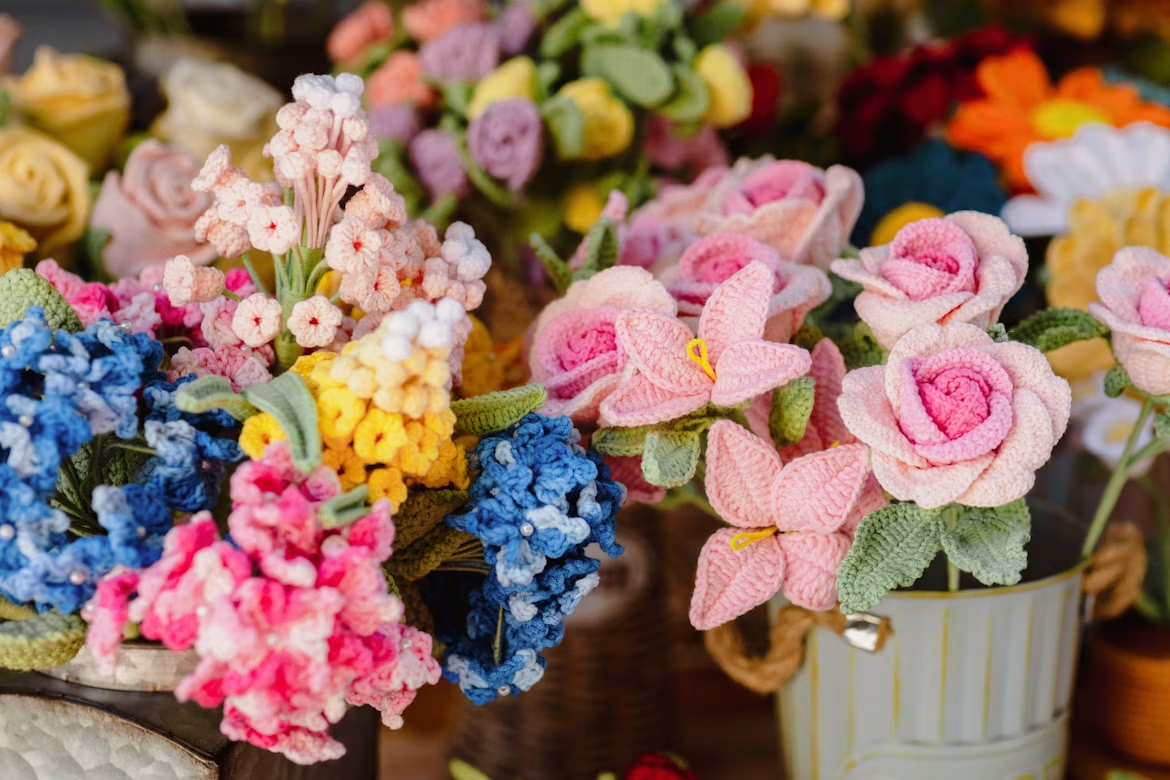
Why Everlasting Flowers Are the Greener Gift
Crochet and preserved flowers last for years — no cold-chain waste, fewer repeat purchases, and a worry-free gift for pet and allergy homes. An honest, balanced look at why everlasting blooms are so often the greener choice.
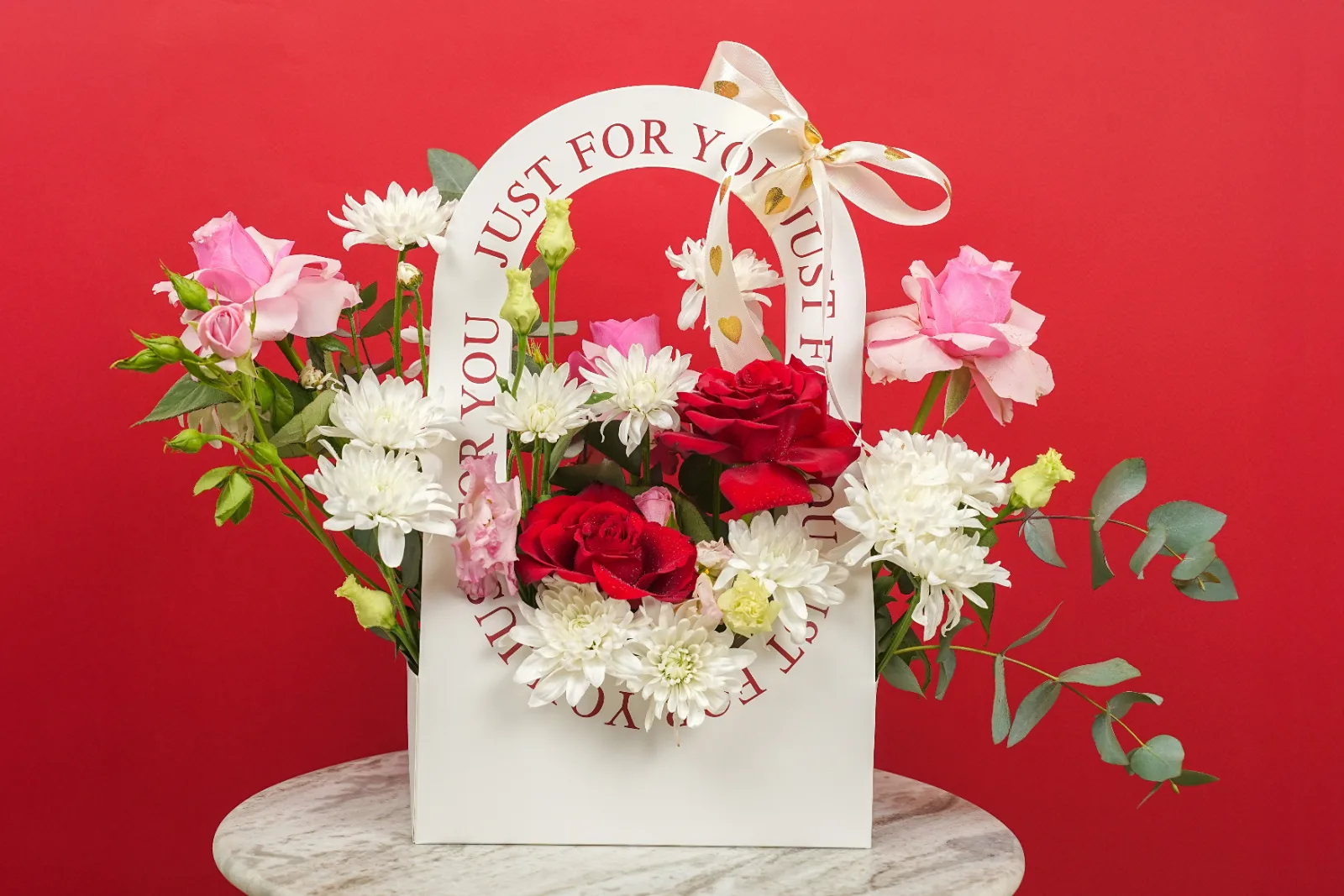
What Makes a Bespoke Florist Different
Bespoke flowers are made for you — designed, arranged and finished around a person and a moment, not stacked in buckets. Here's how an independent Leeds florist differs from supermarket bunches and relay services.
Sustainable Ways to Enjoy Flowers for Longer
Simple, sustainable ways to make flowers last longer — from proper vase care and drying spent blooms to composting and choosing everlasting crochet and preserved flowers.
Ready to order? Browse our shop, read more guides, or get in touch about a bespoke arrangement.
You might also like our same-day flower delivery in Leeds, our flower care guide, our everlasting crochet flowers shipped UK-wide, or shop flowers by occasion.