
The Language of Flowers (Floriography), Explained
The Floral Muse5 min readUpdated
On this page
Long before a quick text message or a printed gift card, flowers did the talking. In Victorian Britain a carefully chosen posy could carry an entire conversation — affection, apology, longing, gratitude, even a polite refusal — without a single word written down. That coded vocabulary is called floriography, the language of flowers, and it still quietly shapes the bouquets we make today.
Here in our Leeds studio we’re often asked what a particular bloom ‘means’, and whether an arrangement can be built to say something specific. The short answer is yes. Below is where the language of flowers came from, how to compose a bouquet that genuinely carries a message, and a mini glossary to get you started.
A short history of the language of flowers
The idea of flowers standing in for words travelled to Britain in the early 1700s, inspired by the Ottoman court practice of sélam — pairing small objects, including blooms, with rhyming phrases. Lady Mary Wortley Montagu described it in her letters home from Constantinople in 1717, and the notion caught the imagination of a nation that adored both gardening and elaborate etiquette.
By the Victorian era it had blossomed into a full craze. Dozens of illustrated ‘flower dictionaries’ were published, beginning with Charlotte de Latour’s Le Langage des Fleurs (1819) and later popularised by Kate Greenaway’s beautifully illustrated volume. In an age when a young couple could barely speak unchaperoned, a tussie-mussie (a tight little nosegay) let people say things propriety otherwise forbade.
One important caveat: the dictionaries never fully agreed. A flower could mean one thing in a Parisian guide and something quite different in a London one — so treat floriography as a rich tradition to draw on, not a rulebook set in stone.
How to build a bouquet that ‘says’ something
Composing a meaningful arrangement is a bit like writing a short note: one clear headline, a few supporting lines, and a tone set by everything around it.
1. Choose a lead flower
Pick the bloom that carries your main message — the ‘headline’. Red roses for deep love, sunflowers for warmth and loyalty, lilies for devotion or remembrance. Everything else supports this choice.
2. Let colour do half the work
Colour often shifts a flower’s meaning entirely: a red rose and a yellow rose say very different things. It’s the single biggest lever you have, so it’s worth thinking about the shade — not just the flower — before you commit.
3. Layer supporting blooms
Add two or three secondary flowers that echo or gently expand the story — carnations for enduring affection, tulips for a heartfelt declaration, freesia for trust. Foliage and texture then frame the message rather than muddling it.
4. Mind the little details
- Number: a single stem reads as intimate and considered; a generous bunch feels celebratory.
- Presentation: a tightly hand-tied posy nods to the Victorian tradition; a loose, garden-gathered style feels contemporary.
- The note: floriography is charming, but nobody carries a flower dictionary any more — a short written line makes sure your meaning lands.
A mini glossary of flower meanings
A starting vocabulary of blooms we work with often.
- Rose — love, though the shade changes everything.
- Lily — purity, devotion and remembrance; a mainstay of both weddings and sympathy work.
- Peony — romance, prosperity and a happy marriage; gloriously fleeting in season.
- Sunflower — adoration, warmth and loyalty; pure sunshine in a stem.
- Tulip — a declaration of love, with each colour adding a nuance.
- Carnation — admiration and lasting affection; endlessly versatile and unfairly overlooked.
- Freesia — trust, friendship and innocence.
- Snapdragon — grace and inner strength.
Want the wider picture across dozens of blooms? Our flower meanings hub gathers every guide in one place.
When you want the message to last
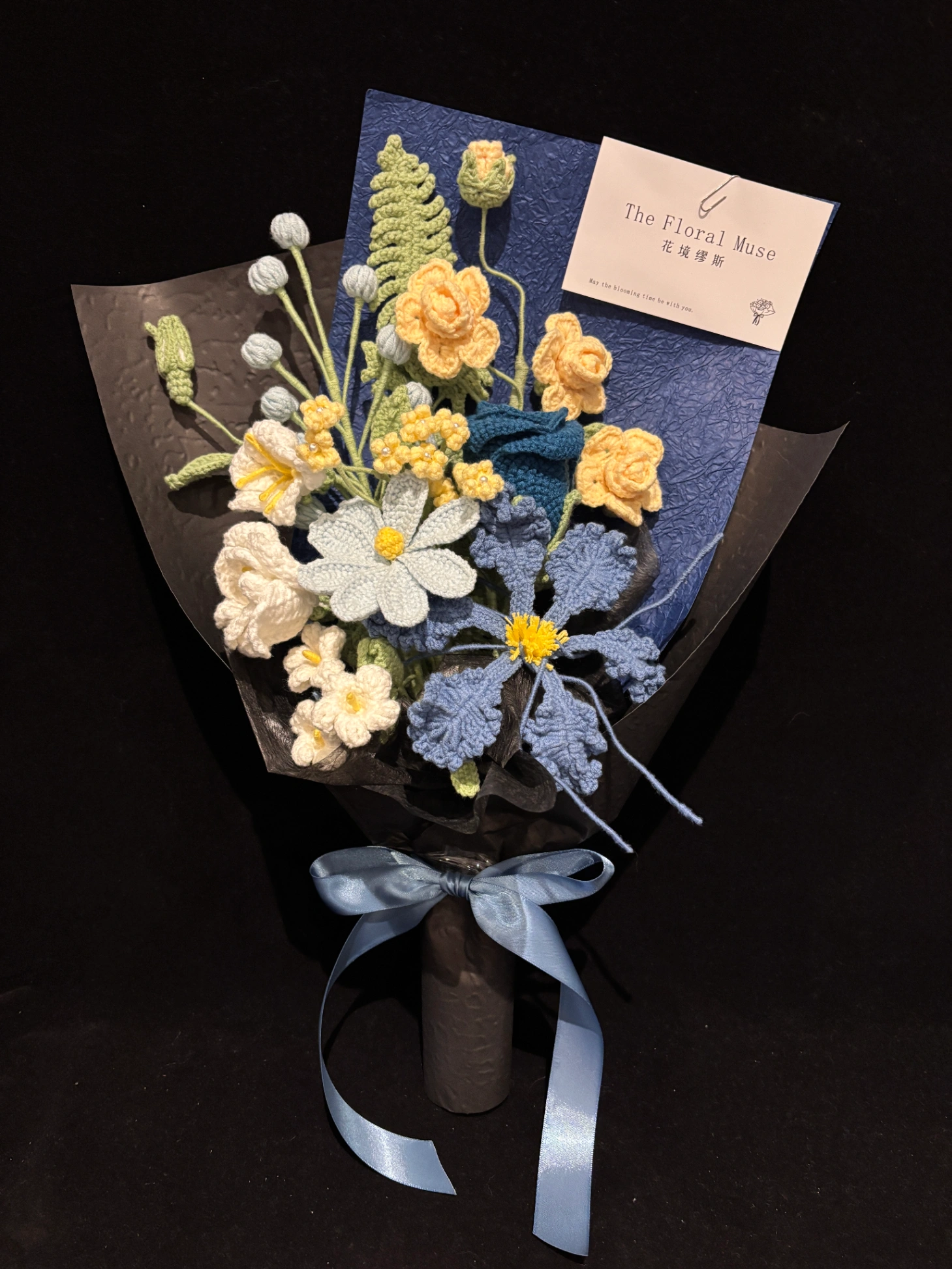
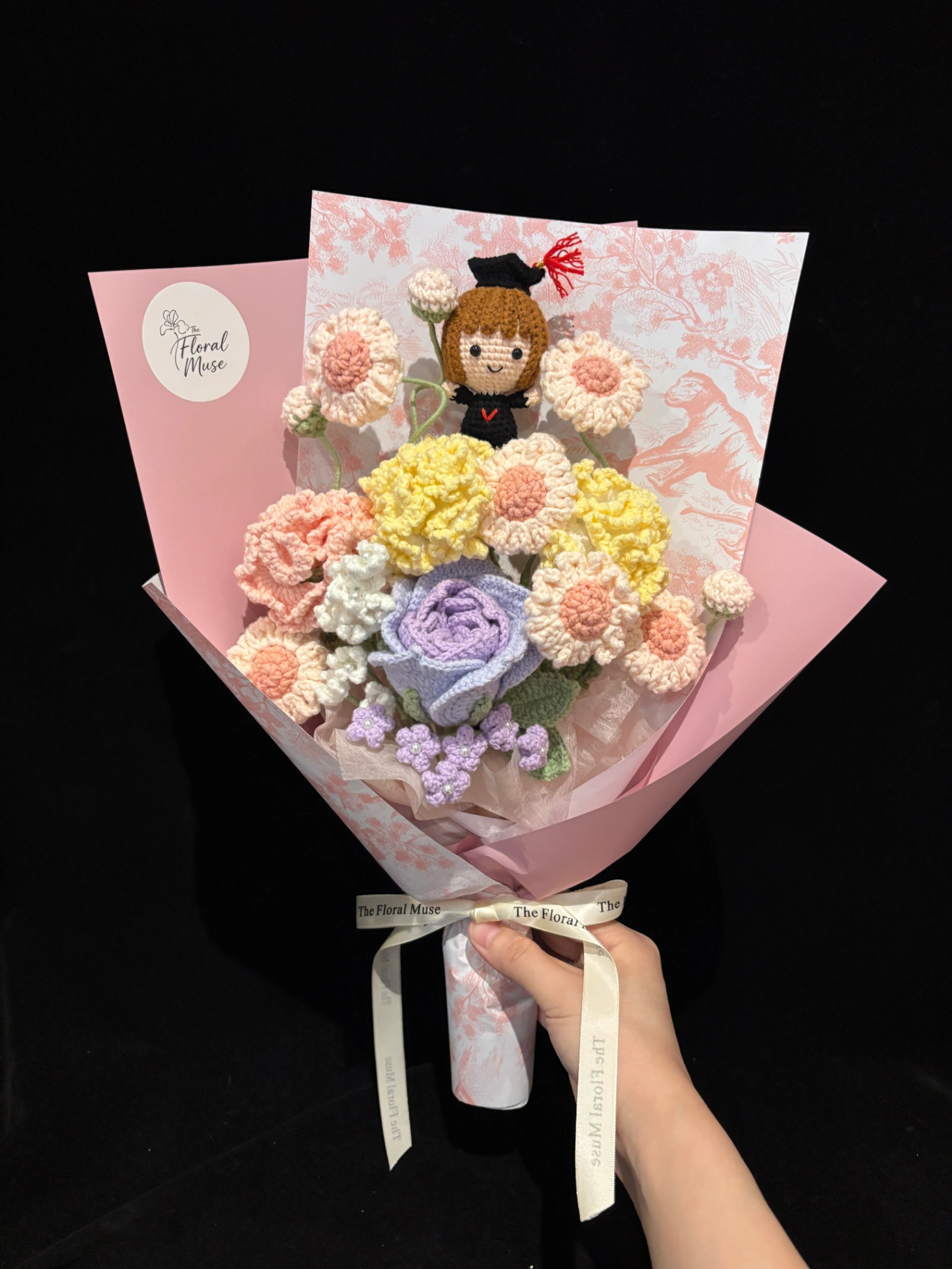
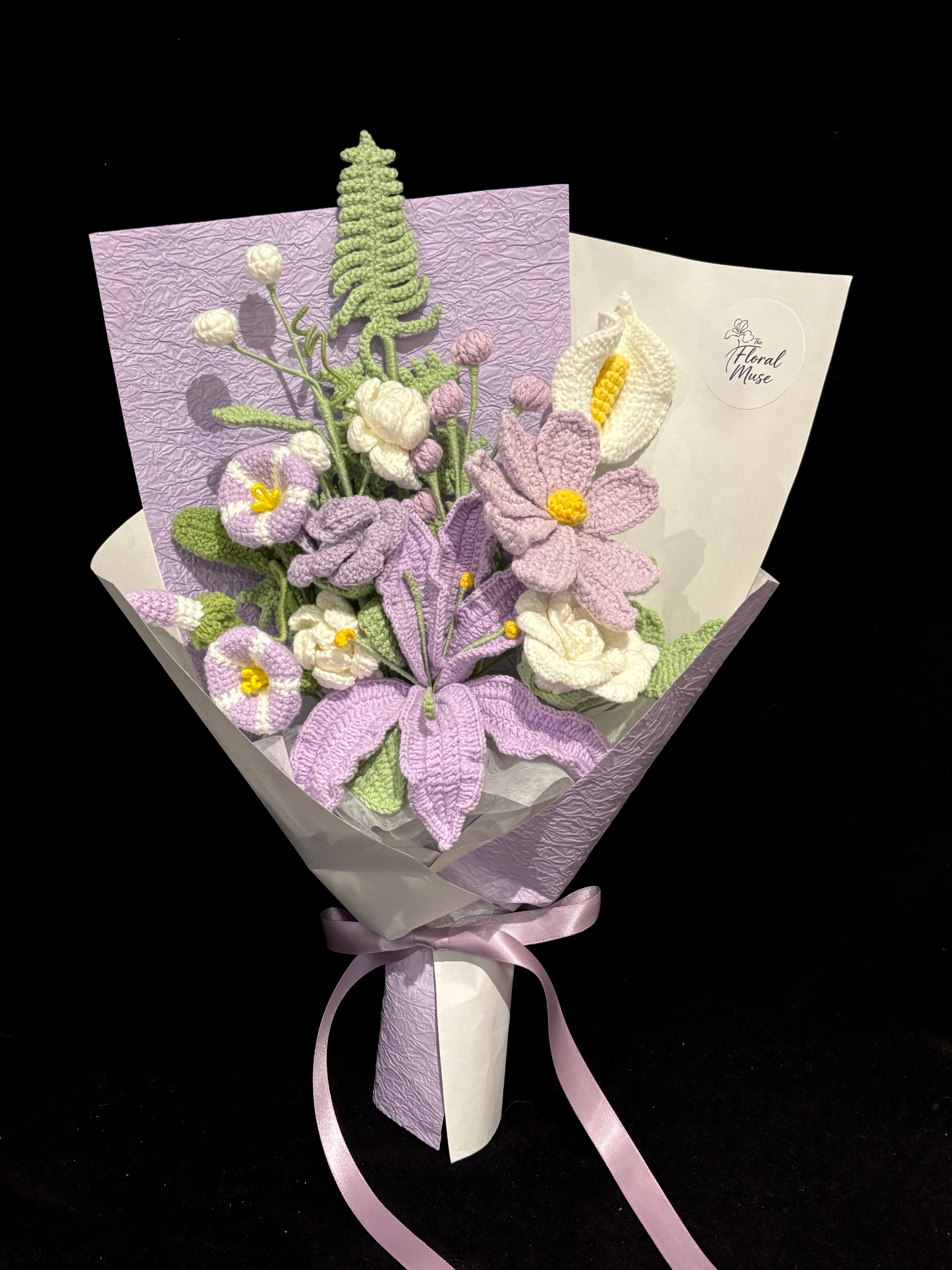
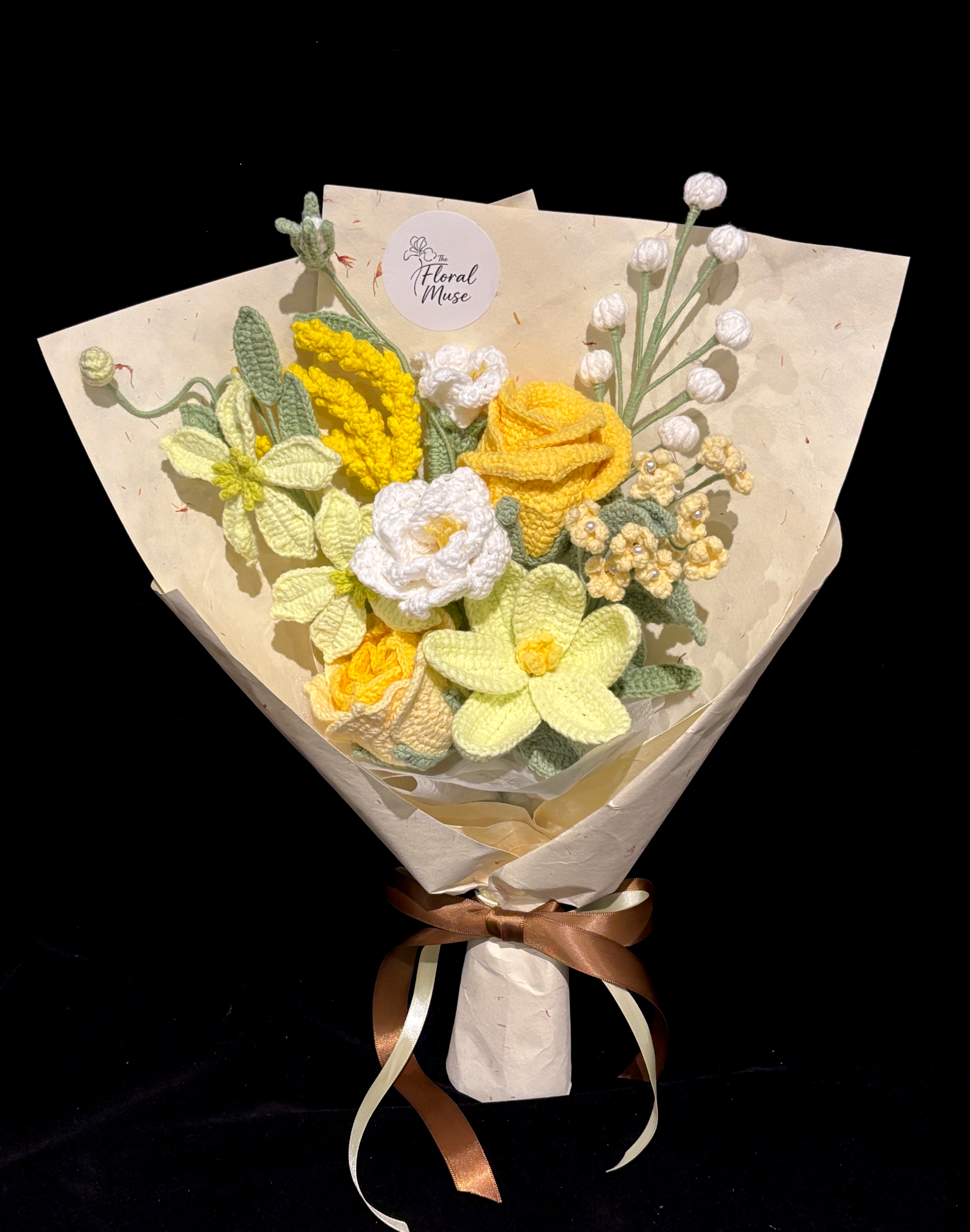
Fresh flowers are the traditional heart of floriography, and there’s real romance in something seasonal and alive — ours stay lovely for roughly 7–14 days with a little care, and we deliver fresh arrangements locally across Leeds and West Yorkshire. If you’d like the sentiment to stay long after the last petal, we also make hand-crocheted flowers and preserved flowers, both shipped UK-wide — a keepsake that carries your meaning for years rather than days. Our everlasting flowers guides explain how each is made and cared for.
Not sure which bloom fits the moment? Our occasion collections translate the language of flowers into ready-made ideas — from an anniversary or get-well gift to considered sympathy flowers. And if you’d rather we did the composing entirely, a mystery bouquet lets us hand-pick a seasonal design around your feeling and let the flowers speak for themselves. Ready to send a message of your own? Browse the collection to begin.
Frequently asked questions
What is floriography?
Floriography is the symbolic language of flowers — the practice, popularised in the Victorian era, of assigning meanings to individual blooms and colours so a bouquet could communicate a feeling or message.
Do flower meanings follow fixed rules?
Not strictly. The old flower dictionaries often disagreed, and meanings vary by culture and colour. Treat floriography as a lovely tradition to draw on, and add a written note so your intention is never lost in translation.
Can you make a bouquet with a specific message for me?
Absolutely — that s our favourite kind of brief. Tell us the sentiment, the recipient and the occasion via our enquiry page and we ll compose something around it in fresh, crochet or preserved flowers.
Which flowers are safest to give around pets?
Take care with fresh flowers around animals: lilies are highly toxic to cats, and tulips, daffodils, hyacinths, chrysanthemums and hydrangea are commonly listed as toxic or irritant to cats and dogs — always check the ASPCA or Blue Cross plant lists and your vet if unsure. Where safety is the priority, our hand-crocheted flowers (pollen-free) and preserved flowers (very little pollen) are a worry-free choice, as there s nothing to ingest.
Shop our flowers
More guides
Tulip Meanings by Colour
A warm florist's guide to what tulip colours really mean — red for love, yellow for cheer, white for forgiveness, purple for royalty and pink for affection — plus a gentle note on keeping them safe around pets.
Sunflower Meaning & When to Give One
Sunflowers mean adoration, loyalty and pure positivity — the perfect pick for get-well wishes, birthdays or simply cheering someone up. Here is what they symbolise, when to give them, and a reassuring note on pet safety.
Rose Colour Meanings: Red, Pink, White, Yellow & More
A warm, practical guide to what each rose colour means — red, pink, white, yellow, orange, lavender and peach — and which shade to choose for anniversaries and Valentine's.
Ready to buy? Shop bouquets.
Ready to order? Browse our shop, read more guides, or get in touch about a bespoke arrangement.
You might also like our same-day flower delivery in Leeds, our flower care guide, our everlasting crochet flowers shipped UK-wide, or shop flowers by occasion.