
The Complete Guide to Flower & Colour Meanings
The Floral Muse8 min readUpdated
On this page
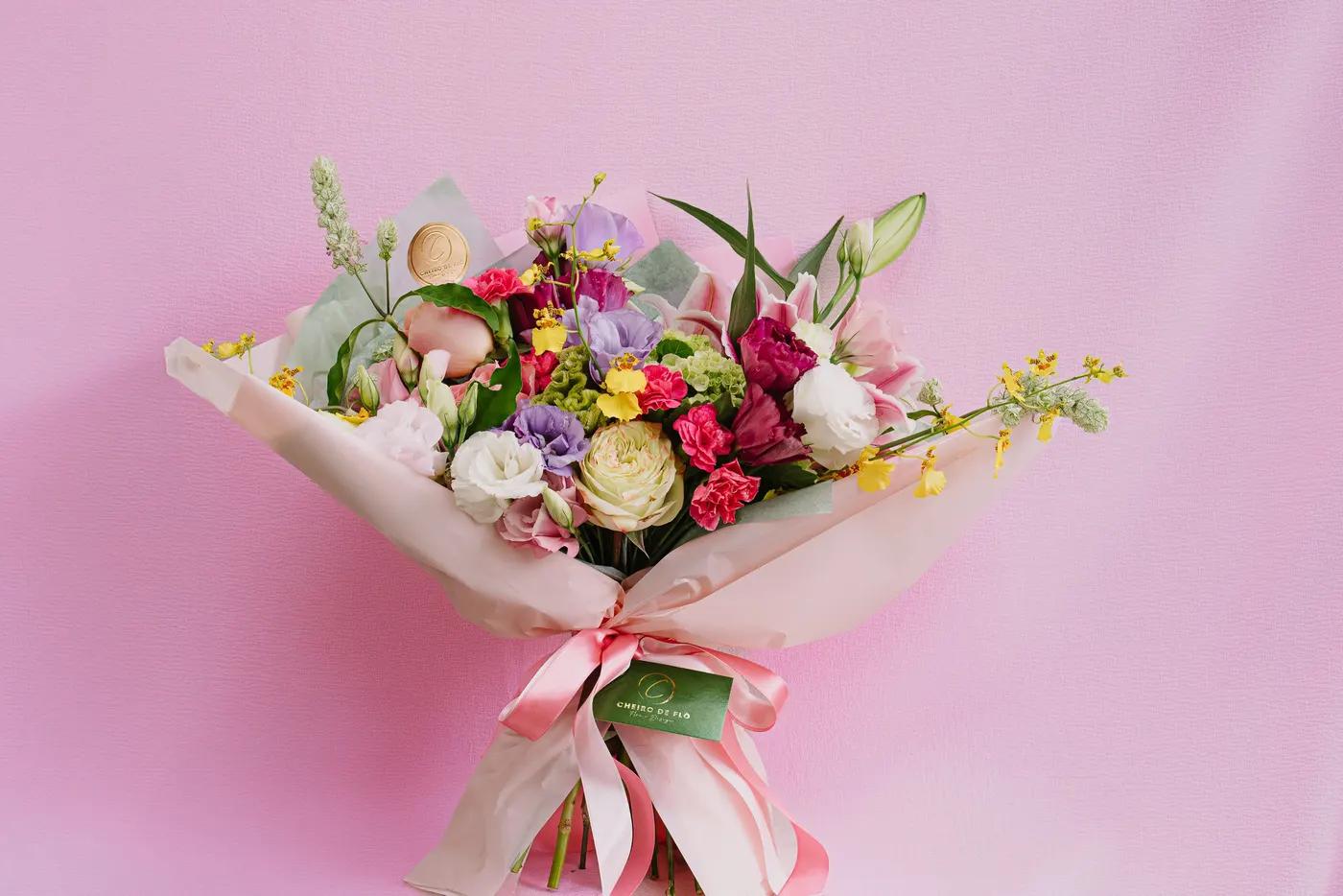
Every bouquet carries a message, whether you plan it or not. Long before greetings cards existed, people leaned on flowers to say the things that felt too big — or too tender — for words: devotion, sympathy, gratitude, apology, sheer joy. That quiet language never really disappeared. Choose the right bloom in the right colour and you can send a feeling as clearly as a written line.
This is our overview of what the best-loved flowers symbolise, how those meanings shift from one culture to the next, and how to pick a stem that says precisely what you mean. Think of it as the map: a quick colour cheat-sheet to bookmark for the next time you're standing in front of a bunch of blooms wondering which one to send. You'll find all our related reading gathered in the flower meanings collection.
Where flower meanings come from
Most of the meanings we still reach for today were formalised in the Victorian era, when an elaborate "language of flowers" — floriography — let people conduct whole conversations through carefully chosen posies. A red rose declared love; a sprig of rosemary asked to be remembered; the way a bloom was handed over (upright or inverted) could flip its meaning entirely. If you enjoy the history and the hidden codes, the Victorian language of flowers is a wonderfully rich tradition to explore.
The charm of floriography isn't that the rules are fixed — they never were. It's that a thoughtfully chosen flower invites the recipient to pause and read a little more into your gift.
You don't need to memorise a Victorian dictionary to send flowers well. In practice, meaning comes from three things working together: the flower itself, its colour, and the occasion you're marking. Get those in tune and the message reads clearly — no card required.
A quick guide to colour meanings
Colour often does more heavy lifting than the flower variety. A rose says romance, but a yellow rose says friendship — a very different note. Here's the shorthand most people in the UK read instinctively:
| Colour | What it usually says | Lovely for |
|---|---|---|
| Red | Love, romance, deep respect | Anniversaries, Valentine's Day |
| Pink | Gratitude, admiration, gentle affection | Thank-yous, new babies, Mother's Day |
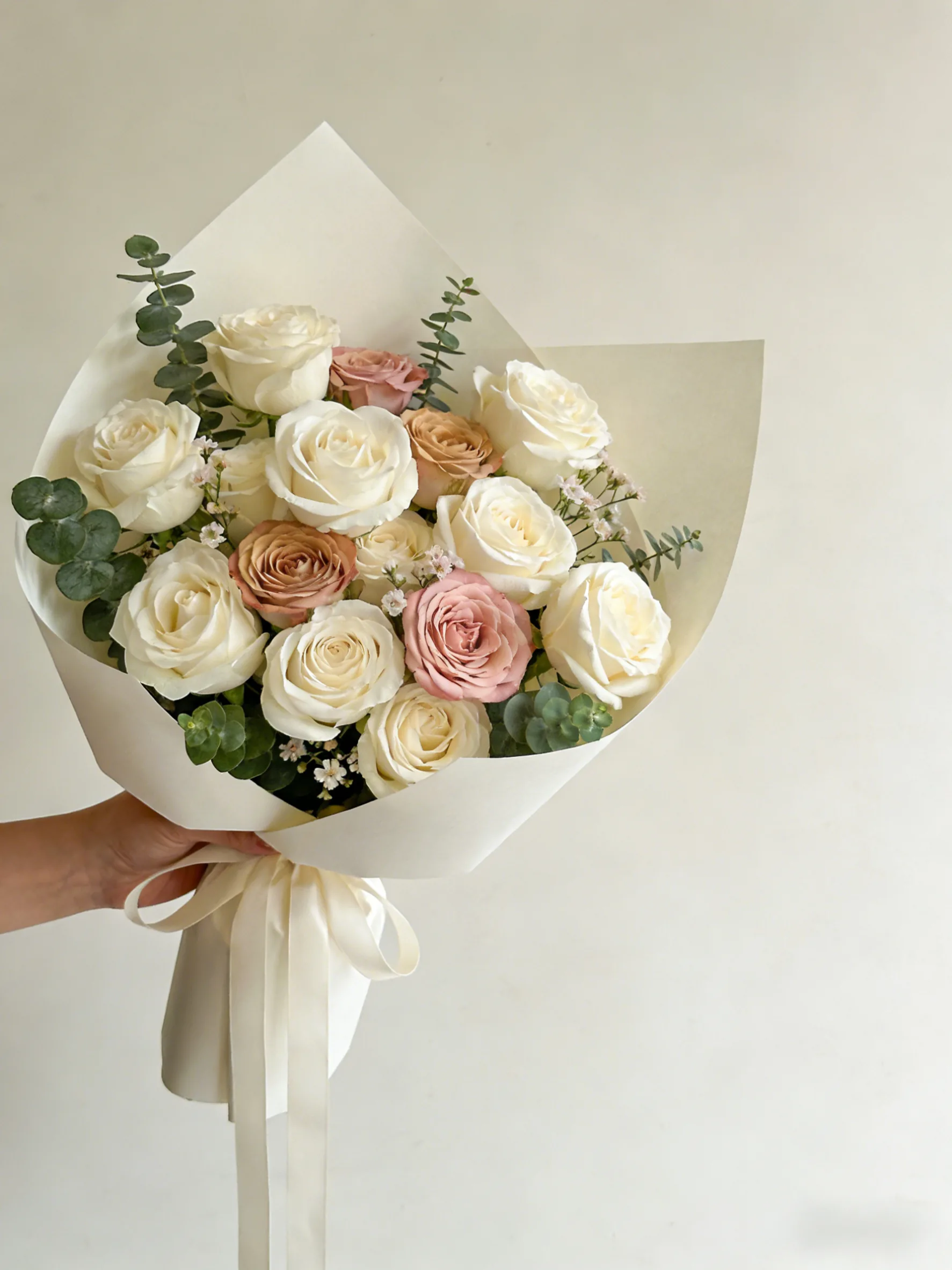
| White | Purity, peace, sympathy | Weddings, condolences, fresh starts |
| Yellow | Friendship, joy, optimism | Get-well wishes, congratulations |
| Purple | Admiration, dignity, a touch of luxury | Celebrating an achievement |
| Orange | Enthusiasm, energy, warmth | Birthdays, bold thank-yous |
Treat these as a starting point rather than strict rules. Mixing colours is perfectly natural, too — a soft blend of pink and white reads as tender and heartfelt, while red and orange together feel vivid and celebratory. If you'd rather we simply read the mood and choose for you, that's exactly what a mystery bouquet is for.
Six flowers and the messages they send
Here are six of the most-requested blooms and, at a glance, what each one tends to communicate.
Roses
The classic messenger of love, though the colour changes everything — red for passion, pink for gratitude and admiration, white for purity or remembrance, yellow for friendship. Reassuringly, true roses (Rosa) are also generally considered non-toxic to cats and dogs, which makes them a safe choice for pet households.
Lilies
Elegant and heavily scented, lilies speak of purity, devotion and, in white, sympathy — which is why they feature so often in funeral and remembrance arrangements. One important caveat: lilies are highly toxic to cats, so we'd steer away from them for any home with a cat.
Peonies
Lush, romantic and famously fleeting, peonies symbolise romance, prosperity and a happy marriage — which is partly why they're such a wedding favourite. Their short late-spring season makes them feel like a genuine treat.
Sunflowers
Pure sunshine in a stem: sunflowers stand for adoration, loyalty and warmth, and their sheer cheerfulness makes them brilliant for get-well and congratulations messages. They're also generally considered non-toxic to cats and dogs.
Tulips
A graceful declaration of love that shifts with colour — red for true love, yellow for cheerful thoughts, purple for admiration. Do note that tulips are commonly listed as irritant to cats and dogs, so keep them out of reach in pet homes.
Carnations
Long overlooked and quietly wonderful: carnations carry meanings of admiration, gratitude and a mother's enduring love, they last beautifully in the vase, and their colour range is huge. We think they deserve far more attention than they tend to get.
How meaning changes across cultures
Flower symbolism is not universal, and it's worth a moment's thought when you're sending to — or from — a particular tradition. A few of the most striking differences:
- White. In much of the West it reads as purity and weddings; across parts of East Asia it's the colour of mourning, so an all-white gift can land very differently.
- Chrysanthemums. Bright and celebratory in the UK and US, but strongly associated with funerals and remembrance in France, Italy and parts of Asia.
- Red. Romance in the Western imagination, but above all a colour of luck, joy and celebration in Chinese culture — wonderful for New Year and weddings.
- Yellow. Friendship and sunshine to most people today, though older European traditions occasionally tied yellow blooms to jealousy.
- Numbers. In some cultures the count matters as much as the flower — even numbers or particular quantities can carry their own meaning.
None of this should make you anxious about getting it "wrong". If you know the recipient's background and want to be thoughtful about it, a quick word with us helps — just get in touch and we'll guide the choice.
Choosing the right bloom for the moment
The easiest way to send the right message is to start from the occasion and work back to the flower and colour. A few pairings we reach for again and again:
- Romance — red roses, tulips or peonies for an anniversary or Valentine's Day.
- Thank you — pink roses or carnations say gratitude without overstating it.
- Get well — cheerful yellow and orange blooms lift the mood for a get-well gift.
- New arrivals — soft pinks and whites suit a new baby, while a bright, joyful mix works for a birthday.
- Sympathy — restrained whites and greens for sympathy and funeral tributes.
You'll find every occasion gathered under flowers for, or you can simply browse what's in season and ready to order on our shop. For a little more inspiration on matching flowers to the moment, our gift guides are a good place to start. A quick word on how we work: our fresh flowers are delivered locally across Leeds and West Yorkshire — there's no strict cut-off, so if you need something for today, get in touch about Leeds delivery and we'll do our best for same-day, subject to availability. With care, a fresh arrangement typically lasts 7–14 days (our flower care guide helps you get the most from them). Our hand-crocheted and preserved flowers are made to order and shipped UK-wide.
Keeping pets and allergies in mind
Meaning matters, but so does safety. As a general guide, lilies (Lilium and Hemerocallis) are highly toxic to cats, and tulips, daffodils, hyacinth, hydrangea, chrysanthemum, ranunculus and ivy are commonly listed as toxic or irritant to cats and/or dogs. Roses, sunflowers, snapdragons, orchids, freesia and lisianthus are generally considered non-toxic. This is guidance only — always check your vet or the ASPCA and Blue Cross plant lists before choosing for a home with animals, and never treat any flower as a medical guarantee. For more, browse our pet-safe and allergy-friendly flower guides.
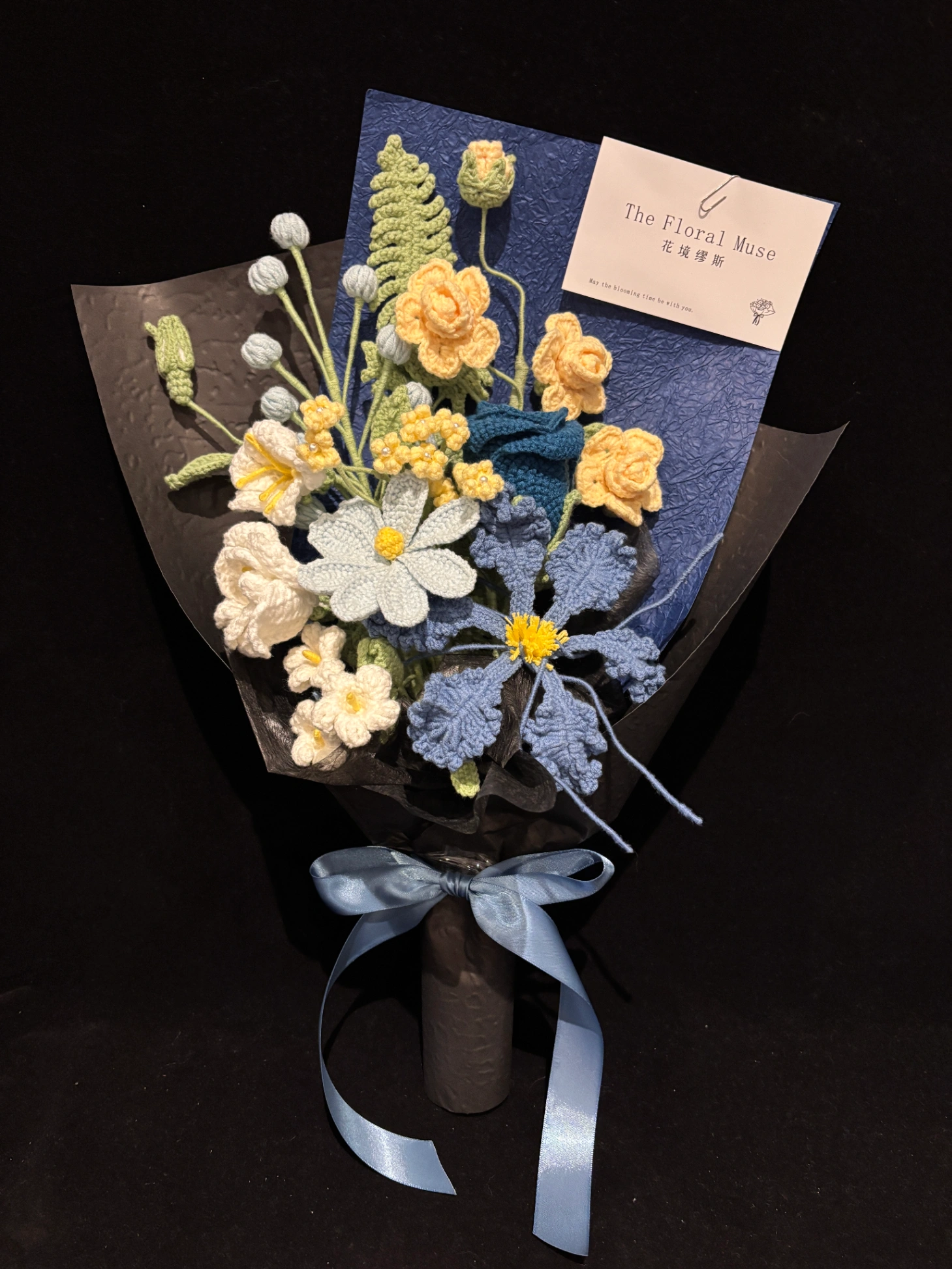
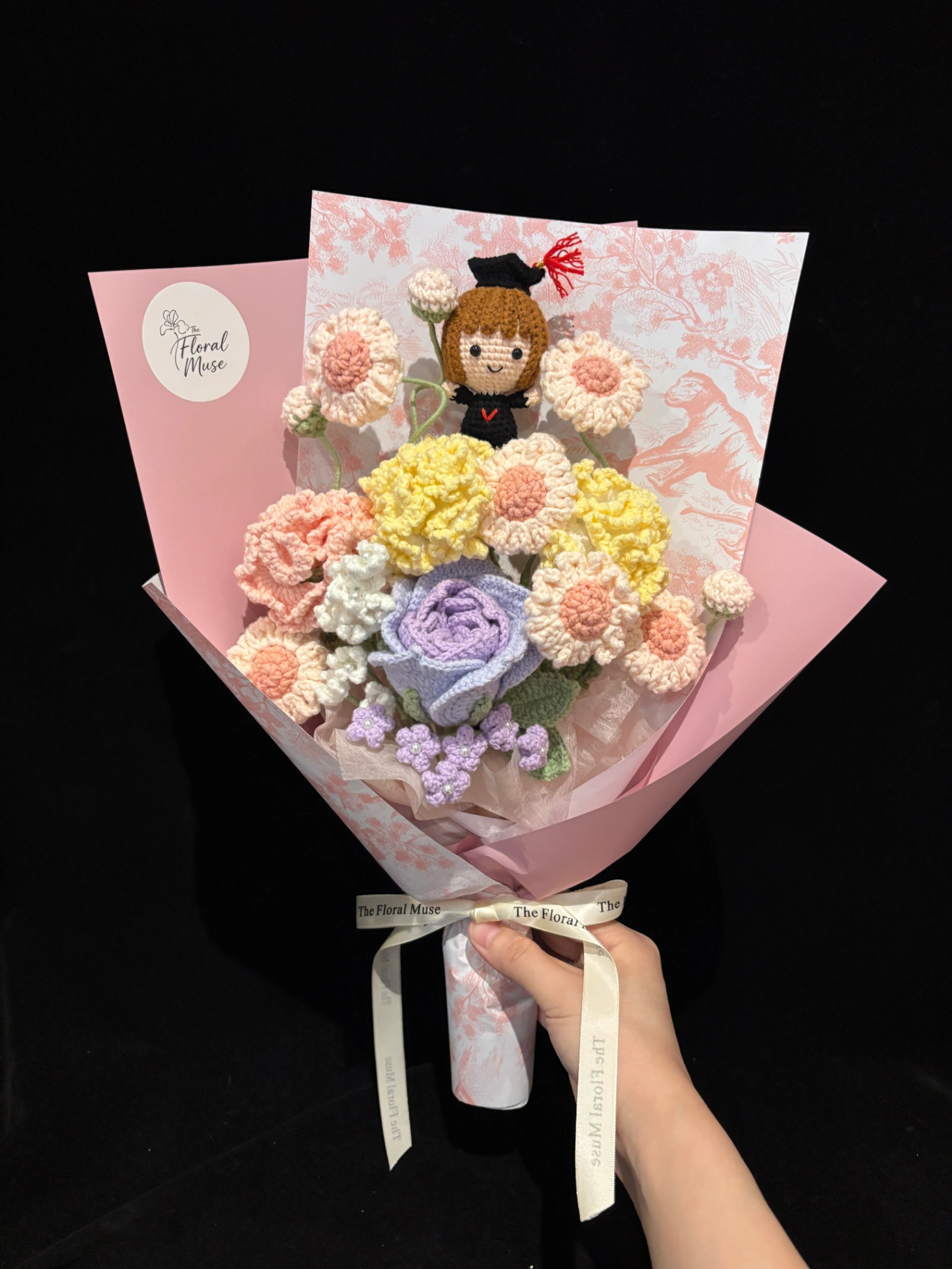
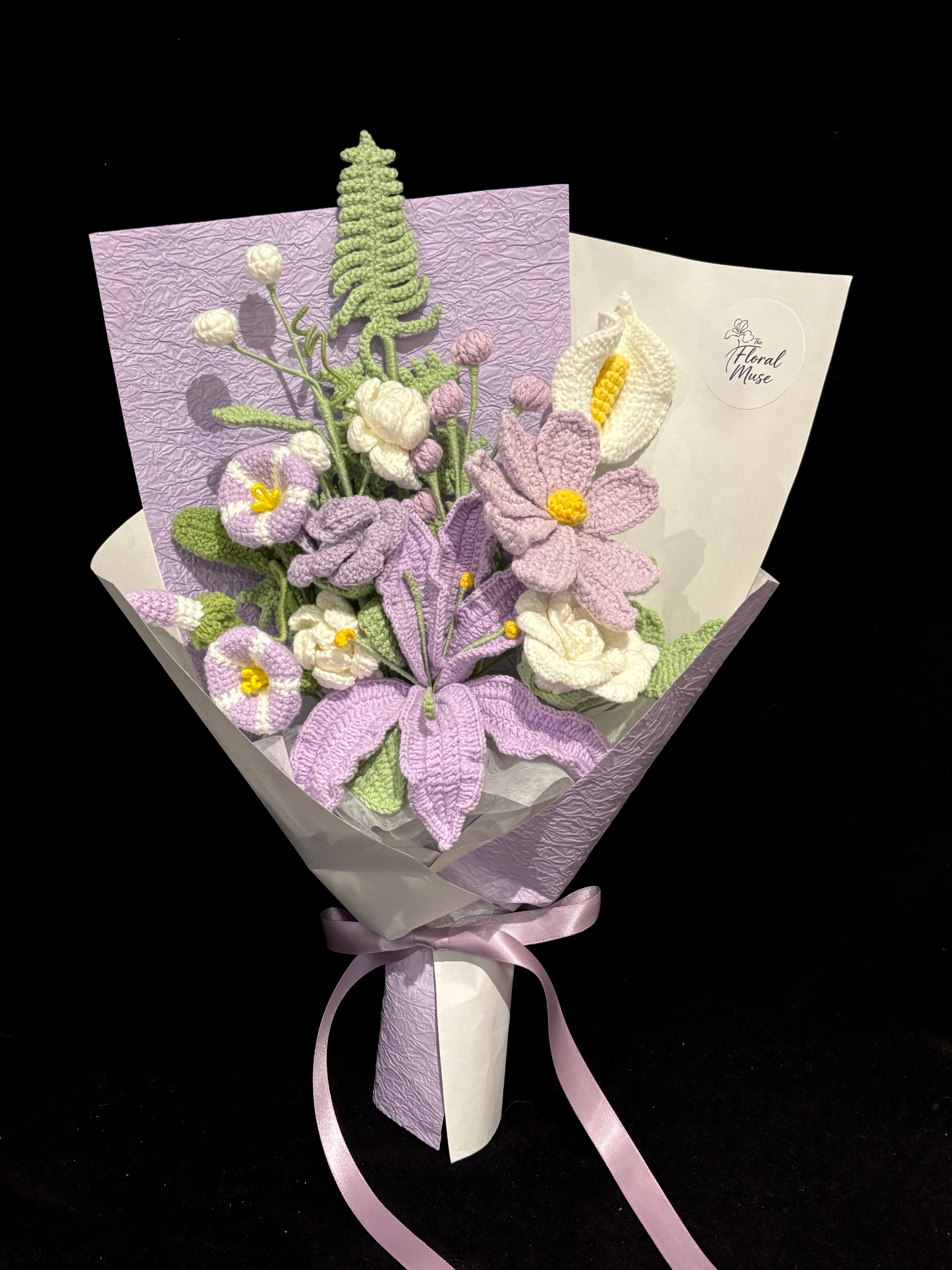
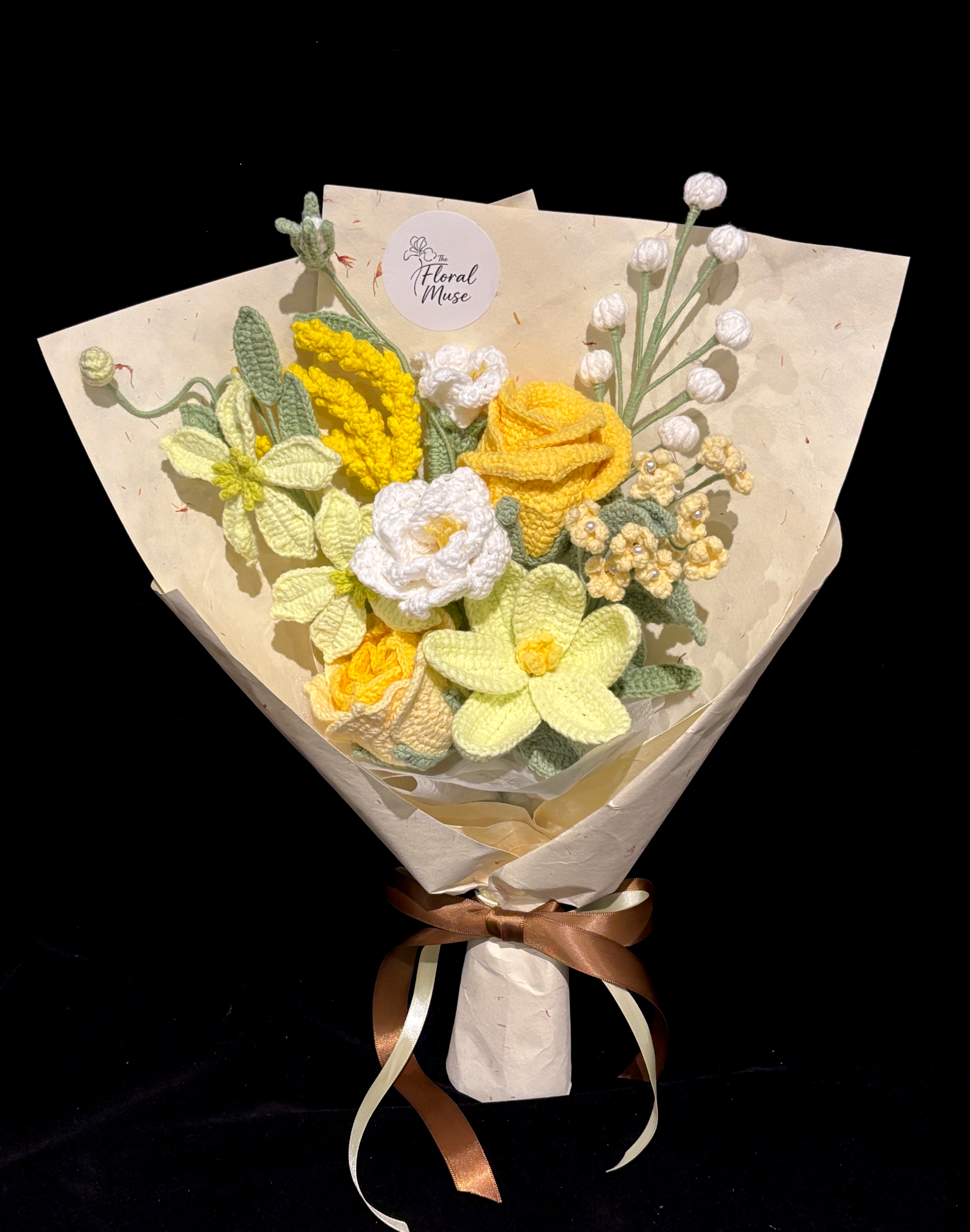
When safety or allergies are the priority, our everlasting options take the worry away entirely. Hand-crocheted flowers are inert yarn — pollen-free, with nothing to ingest — and preserved flowers release very little pollen (though not edible). Both keep their meaning without any of the risk, which is why they're our go-to for pet homes and hay-fever sufferers; see also our allergy-friendly bouquet options and our everlasting flower guides.
Frequently asked questions
What is the safest flower to give if I'm not sure of the meaning?
Pale roses or a soft pink-and-white mix are hard to misread — they signal warmth, gratitude and affection across most occasions. If you'd rather not decide at all, tell us the mood and we'll compose something fitting.
Which flower says thank you?
Pink roses and carnations are the traditional thank-you blooms, both reading as sincere gratitude and admiration. Sunflowers work beautifully too when you want the message to feel bright and heartfelt.
Are there flowers that are safe around cats and dogs?
Roses, sunflowers, snapdragons, orchids, freesia and lisianthus are generally considered non-toxic, while lilies in particular are highly toxic to cats. Always double-check with your vet or the ASPCA or Blue Cross lists, or choose our crochet flowers (pollen-free) or preserved flowers (very little pollen) for complete peace of mind.
Do flower meanings really matter, or is it just tradition?
They're a lovely tradition rather than a rigid code — the recipient's feelings matter far more than any Victorian rulebook. Knowing the meanings simply gives you a thoughtful head start when you want your gift to say something specific.
Shop our flowers
More guides
Tulip Meanings by Colour
A warm florist's guide to what tulip colours really mean — red for love, yellow for cheer, white for forgiveness, purple for royalty and pink for affection — plus a gentle note on keeping them safe around pets.
Sunflower Meaning & When to Give One
Sunflowers mean adoration, loyalty and pure positivity — the perfect pick for get-well wishes, birthdays or simply cheering someone up. Here is what they symbolise, when to give them, and a reassuring note on pet safety.
Rose Colour Meanings: Red, Pink, White, Yellow & More
A warm, practical guide to what each rose colour means — red, pink, white, yellow, orange, lavender and peach — and which shade to choose for anniversaries and Valentine's.
Ready to buy? Shop bouquets.
Ready to order? Browse our shop, read more guides, or get in touch about a bespoke arrangement.
You might also like our same-day flower delivery in Leeds, our flower care guide, our everlasting crochet flowers shipped UK-wide, or shop flowers by occasion.